Kendo — the way of the sword
剣道 · Kendō
Kendo is a Japanese martial art that brings together swordsmanship, physical training and the cultivation of character. Its name combines ken (sword) and dō (way): a path of learning that continues every time we enter the dojo.
From tradition to modern practice
Kendo has its roots in Japanese schools of swordsmanship, known as kenjutsu. The development of bamboo swords and protective armour made it possible to practise with a partner using direct contact. Modern kendo gradually emerged from this tradition and is now practised around the world.
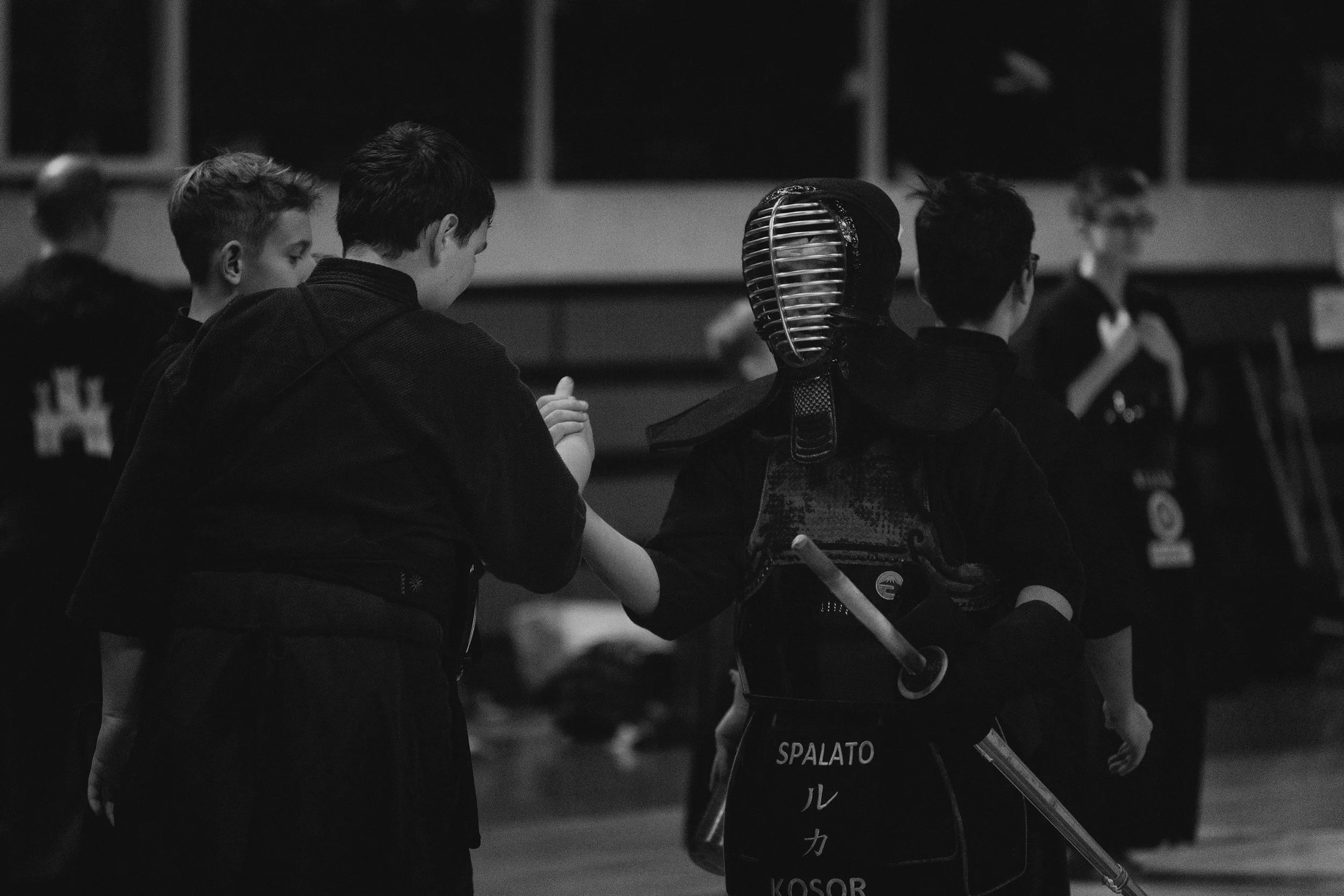
We train with a shinai, a bamboo sword, and protective armour called bōgu. Practice develops posture, footwork, distance, timing and correct striking technique. We also study kata—set forms performed in pairs, usually with wooden swords—which deepen our understanding of the principles of swordsmanship.
A Japanese tradition of developing character
The All Japan Kendo Federation describes kendo as a way to develop human character through the principles of the Japanese sword, the katana. In everyday practice, this means training sincerely, showing courtesy, respecting others and working patiently to improve ourselves.
Rei, the respect expressed through bowing and our conduct, is central to this tradition. Caring for a training partner, handling equipment thoughtfully and being willing to listen are all part of practice. Our partners give us the opportunity to learn, and we offer them the same care in return.
Ki-ken-tai-itchi describes the unity of spirit, sword and body: intention, sword movement and body movement working together. Zanshin is the continuing awareness that remains after a technique—maintaining attention, posture and readiness.
What does practice involve?
Beginners gradually learn the basic stance, footwork, grip and first strikes. Once these foundations are established, they move on to training in armour when their instructor considers them ready. Repeating simple movements builds coordination and a feel for technique, while paired practice teaches adaptability and composure.
The armour consists of protection for the head (men), hands and forearms (kote), torso (dō), and waist and hips (tare). Traditional clothing comprises a kendōgi jacket and wide, pleated trousers called hakama. You do not need to own any of this equipment for your first visit.
A practice that grows with you
Kendo also has a competitive side. A valid strike requires precision, correct technique, posture and commitment, together with continued awareness after the attack. Yet people come to practice with many different aims: competition, an interest in Japanese culture, regular exercise or a sense of community.
Experience develops through patience. Over time, we learn to judge the moment more clearly, accept mistakes and try again. Kendo can become a lifelong practice that brings people of different generations together.
Your first step in Split
Beginners are welcome at Spalato Kendo Club. No previous experience is needed: bring comfortable sportswear, a bottle of water and a willingness to learn. We practise barefoot, and your first trial session is free.